


Avoiding the flu
Are your habits healthy enough?
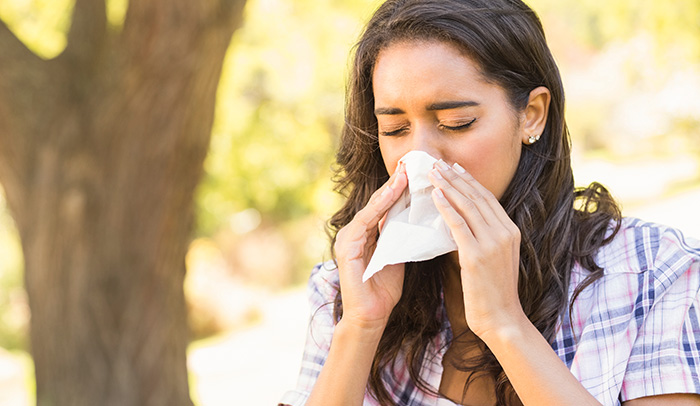
Are you being nudged to get your flu shot? If you’re a healthy young adult who takes care of yourself, you may think you are naturally protected from the flu. In a recent survey by Student Health 101, three out of four students who responded said they believe that healthy lifestyle choices will help protect them from flu infection this season. Is this true?
Only to a relatively minimal degree. Healthy behaviours serve us very well in many ways—but they cannot substitute for flu vaccination. It’s tempting to believe otherwise, because we are routinely subjected to inaccurate and misleading messages about how immunity works. You have probably come across claims that a particular food product or dietary supplement can “boost” your immune system. Few of these claims are backed by evidence. What they boost instead is our false sense of protection against a common and contagious virus. The flu is at best an inconvenience that disrupts students’ academic performance, extracurriculars, and relationships. At worst, it’s a serious and life-threatening disease, even to some young, otherwise healthy adults.

Exposure to the flu is almost inevitable
“There’s nothing you can do to resist the flu besides getting vaccinated,” says Dr. Paul Offit, professor of vaccinology and professor of pediatrics at the University of Pennsylvania School of Medicine. “If you enter the world, you’re going to be exposed [to influenza viruses].”
“For the student population, the risk of exposure is very high,” says Dr. Shelly McNeil, Clinical Investigator at the Canadian Centre for Vaccinology, Nova Scotia.“Preventing influenza in places like universities can only be accomplished by having the majority of people vaccinated.”
It’s true that if we are chronically stressed out, exhausted, or malnourished, our immune function probably won’t be as good as it could be, which does increase our chances of becoming severely infected. But if we’re in reasonable health to start with, sleeping longer or eating better does not protect us from flu infection.

Why we can’t “boost” our immune system
It may seem intuitive that if we can lower our immunity by becoming physically and emotionally run-down, we can also strengthen it by taking care of ourselves. Surprisingly, that doesn’t follow—at least, not in the ways we might expect.
While healthful habits help us in all sorts of ways, they cannot equip us with the antibodies that could fight off a specific virus. Reasonably healthy people already have normal immune function, and this is not “boosted” by taking extra care of ourselves. “There’s no going above normal,” says Dr. Ben Kruskal, chief of infectious diseases at Harvard Vanguard Medical Associates /Atrius Health, Boston, Massachusetts. “You can only fill your gas tank as full as it gets.”
Health behaviours are important, but complementary, says Dr. McNeil. “Getting the flu shot is the single most important thing you can do to protect yourself from influenza.”

Healthy habits don’t generate antibodies
Science highlights the unique role of vaccines. “The flu shot has protein in it that is [similar to] the protein in the influenza virus. Your immune system responds to that and develops antibodies, and the antibodies protect you if you’re exposed to that strain of influenza later,” says Dr. Bonnie Henry, Deputy Provincial Health Officer for the Province of British Columbia and Associate Professor of Medicine at the University of British Columbia.
Can your healthy habits create those antibodies? Unfortunately, no.
“Health behaviours strengthen the immune system to some extent in the sense that the healthier we are in general, the more likely our immune system is able to handle exposure to all types of infections. But the reality is that none of those things are sufficient to prevent exposure to this virus or eliminate your chances of getting the flu,” says Dr. McNeil.

Healthy behavior + vaccine = protection
Avoiding or minimizing a flu infection, experts say, requires vaccination in addition to healthy behaviors. “It’s a checklist of things,” says Dr.Allan Grill, Assistant Professor of Family and Community Medicine at the University of Toronto and member of The Advisory Committee for Ontario’s Immunization System Review. “It’s a combination of getting vaccinated and practicing specific healthy lifestyle behaviours—washing hands, coughing into your sleeve, disinfecting surfaces, getting enough sleep.”

Can you get the flu from the flu shot?
You will likely hear people say the flu vaccine gave them the flu. It can look that way, but they are mistaken. Here’s how we know this for sure:
- The viruses in the flu shot have been killed. They can’t make copies of themselves, so they can’t make people sick.
- The nasal spray form of the flu vaccine is live and weakened so that it can’t cause infection. The viruses cannot reproduce at body temperature, survive in the lungs, or cause the flu.
Here’s why some people may get sick after a flu shot:
- They may have a bad cold or another respiratory illness.
- They may have been infected by a flu virus that wasn’t in the vaccine. “The majority of people that say, ‘I got sick last year with the flu even though I got immunized,’ likely didn’t have influenza. They had another viral infection, like RSV (respiratory syncytial virus) or parainfluenza, which also circulate during influenza season,” says Dr. Allan Grill, Assistant Professor of Family and Community Medicine at the University of Toronto and member of The Advisory Committee for Ontario’s Immunization System Review.
- They may have been exposed to a flu virus shortly before or after getting vaccinated; it takes up to two weeks for the vaccine to become fully effective.
Can you get the flu from a bird or pig?
Influenza viruses are constantly mutating (evolving), “so there are lots of opportunities for drastic changes,” says Dr. Charles Carlton-Smith, a research fellow specializing in virology and immunology at Massachusetts General Hospital. In certain circumstances, flu viruses can mutate in ways that enable them to transmit from birds or animals to humans. Still, that source of infection is unlikely.
Do sleep & stress management protect us from the flu?
Does stress management protect us from the flu?
De-stressing offers limited protection against the flu
It is important for many reasons to manage our stress. But in terms of susceptibility to the flu, the benefits of stress management are difficult to measure and are probably pretty small.
“The worst personal and academic stress—your girlfriend broke up with you, your grandmother just died, you’re failing your classes—may mean you are maybe 5 percent more likely to get sick enough from the flu that it keeps you from your normal activity, like going to class or a party,” says Dr. Ben Kruskal, Chief of Infectious Disease at Harvard Vanguard Medical Associates/Atrius, Boston, Massachusetts.
Takeaway
Stress management is extremely valuable for our health and wellbeing. For strategies, check out Stress & the student body in this issue. Stress management does not substitute for a flu shot.
Does sleep protect us from the flu?
Adequate sleep offers little protection against infection
The extent to which our sleep determines our susceptibility to infection is probably relatively small, says Dr. Kruskal. “If you want to protect your house against termites, it helps that it is structurally sound with a good paint job and no cracks. But those do not protect against termites in the way that an anti-termite spray treatment does.” For humans, getting adequate sleep is necessary, part of being structurally sound—but that does not in itself protect us from the (viral) invasion.
That said, sleep can affect your immune function
Chronic sleep deprivation is a state of extended stress that appears to impact immune function and general health, according to a 2012 study in the European Journal of Physiology. But we don’t really know how that works. Scientists have a lot to learn about how sleep protects our health in general. “We all believe good sleep is critical to good health, and there are some illnesses like hypertension that are known to be more frequent among people with chronically bad sleep. In time the mechanisms will be worked out, but to date many remain the stuff of conjecture,” says Dr. Tim Lahey, Associate Professor of Medicine and Associate Professor of Microbiology and Immunology at the Geisel School of Medicine, Dartmouth College, New Hampshire.
Takeaway
Sleep is vital for our health and wellbeing. It does not equip us with flu virus antibodies, however, so it cannot substitute for a flu shot.
Do exercise & healthy eating protect us from the flu?
Does physical activity protect us from the flu?
Physical activity offers little protection against infection
“There’s no really good data on how and whether physical activity protects against infection. It may have a small effect,” says Dr. Kruskal. “Imagine a SWAT team in peak physical condition. Let’s say you work out consistently, you’re very muscular, you eat and sleep well. Those habits are not going to substitute for body armor if someone shoots you.” Of course, those healthy habits serve us very well in other ways. (Student Health 101 is naming Dr. Kruskal our expert consultant in analogy.)
That said, physical activity may affect the immune system
Physical activity is another excellent way to cope with stress, and exercise seems to affect the immune system in direct ways too, according to the National Library of Medicine. There are theories about how this works, but no conclusions yet. For example, exercise raises body temperature, and maybe that makes life uncomfortable for some disease organisms. (Fever is believed to be helpful in this same way.) But again, don’t count on your workouts for flu protection.
Takeaway
Physical activity is a powerful medicine and essential for our health and wellbeing. It does not substitute for a flu shot, though.
Does healthful eating protect us from the flu?
Healthful eating offers limited protection against infection
“Eating a very, very healthy diet will not give you better immunity than if you eat a reasonably healthy diet,” says Dr. Kruskal. Again, if your immune system is functioning normally, you can’t “boost” it.
If you’re malnourished, that’s different
“Malnourishment is clearly associated with vulnerability to a variety of diseases, for instance tuberculosis. It stands to reason, then, that maintaining a healthy diet can help prevent or ameliorate infections and other illnesses as well,” says Dr. Lahey. Again, the data are limited about how that works. Most of us are not malnourished, so we won’t be taking that immunity hit in the first place.
Eat healthfully anyway
You know the drill: lots of fruits and vegetables, whole grains, and moderate amounts of the right kinds of fats and proteins (favour plant-based sources over animal-based). Don’t overdo highly processed foods, as these tend to be high in sugar, saturated fats, and salt.
Takeaway
Healthful eating is a gift to our bodies and great for our health and well-being. Nevertheless, it does not provide flu antibodies.
What’s missing from alternative treatments and lifestyle practices?
Alternative treatments and practices probably won’t help
Can alternative medicine and lifestyle practices help your immune system resist infection? Although some practitioners say yes, the vast majority of such claims are not supported by evidence. For example, there is no evidence that massage therapy, detox cleanses, or eating organic can improve our immunity. “There’s no evidence at all that they protect you from infection,” says Dr. Henry.
Homeopathy
The homeopathic treatment Oscillococcinum is sometimes cited as a flu remedy, but an analysis of multiple studies in Cochrane Database Systematic Reviews (2004) concluded that the evidence isn’t there.
Yoga and meditation
Yoga, meditation, and biofeedback are associated with a physiological relaxation response. “Again, the studies are small and not rigorously designed. We don’t have enough information on whether these practices offer any protection against infectious or chronic disease,” says Dr. Kruskal. These practices can be very helpful for other reasons, of course.
Takeaway
Some alternative treatments and lifestyle practices may help you feel good. They do not serve as a flu shot.
What are the side effects of the flu shot?
“The flu shot is incredibly safe and has been shown time and time again to confer protection against a lethal disease. Yet generally well-meaning people decline it and other measures designed to keep our most fragile citizens safe from harm,” says Dr. Lahey.
Some people have a mild reaction to the flu vaccine. Here’s what that can look like:
- The flu shot can cause pain and redness at the injection site and sometimes a low fever.
- The nasal spray sometimes causes mild upper respiratory symptoms, like sniffles.
Allergic to eggs? Modern flu vaccines won’t cause symptoms. Although the vaccine development process involves eggs, these days there is no risk of contamination.
How contagious is the flu? (and other basics)
“I’ve got the flu” is not just another way of saying “I feel rotten.” There are lots of reasons for feeling rotten. The flu—influenza—is a specific disease caused by a particular group of viruses. The flu is not the same as the common cold (which can also feel horrible).
Influenza is very contagious. If you have the flu, you can pass on the virus to half the people you come in contact with. Every year, up to 10-20 percent of people get the flu, according to the Public Health Agency of Canada.
You can catch the flu virus in four ways:
- Via droplets in the air from infected people coughing or sneezing around you
- By handling something previously handled by an infected person (e.g., a doorknob).
- By putting your mouth on something that someone infected has touched with their mouth (e.g., drinking from the same cup, taking a bite of their sandwich).
- By direct contact, such as kissing or shaking hands.
You get sick pretty quickly after you’ve been exposed to the virus, usually within four days. Other people can catch the flu from you before you even realize you’re sick.
The flu makes some people very sick. Every year thousands of Canadians are hospitalized and hundreds die. That can include young, otherwise healthy people.
If you have the flu:
- You will feel miserable for a week or even two
- You will probably have a high fever
- Your head and body will ache
- You will have a cough, sore throat, and a stuffed-up nose
- You may vomit or have diarrhea
Which is better for us: the vaccine or natural exposure?
There are only two sure ways to reduce your risk of getting the flu:
- Get vaccinated: The annual flu vaccine is safe. It stimulates your immune system to produce antibodies to the three or four flu viruses that are likely to be predominant this season. Ask at your student health centre.
- Get the flu: You’ll be miserably sick for a week or two. In 2013, about one in five undergraduates said that having a cold, sore throat, or the flu had damaged their academic performance (American College Health Association National College Health Assessment, Canadian reference group). But the flu virus, like the vaccine, will produce antibodies that will protect you against being re-infected by the flu virus that made you sick.
“The vaccine provides the same immunity that’s induced by natural infection without your having to pay the price of natural infection,” says Dr. Paul Offit, Professor of Vaccinology and Professor of Pediatrics, University of Pennsylvania School of Medicine.
Takeaway
The flu vaccine is safer and more convenient than natural flu infection. Getting vaccinated in general is one of the most effective—and easiest— behaviours that protect and nourish our health.
What’s wrong with vitamin supplements and “natural” flu remedies?
Vitamin supplements do not protect us from infection
Do not fall for the hype. “There are homeopathic products called nosodes that some homeopathic practitioners say will protect from infections and are vaccine substitutes. These have never been shown to have any benefit, and Health Canada has recently required them to be labelled, noting the product is not a vaccine or an alternative to vaccination. They don’t have any active ingredients that help your body fight off infection. They can’t replace immunization,” says Dr. Henry.
And manufacturers may regret their claims to the contrary
In 2008, the manufacturers of Airborne, a vitamin and herbal supplement that had been marketed as “boosting” the immune system and improving germ resistance, agreed to refund $23.3 million to consumers as a penalty for their false advertising. “There’s no credible evidence that what’s in Airborne can prevent colds or protect you from a germy environment. Airborne is basically an overpriced, run-of-the-mill vitamin pill that’s been cleverly, but deceptively, marketed,” said David Schardt, a senior nutritionist from the Center for Science in the Public Interest (CPSI).
Takeaway
Vitamin supplements do not substitute for a flu shot. Should you take them for other reasons? Probably not. Increasing evidence suggests that for most of us, vitamin supplements are a waste of money and may even do more harm than good. (For people on certain restrictive diets, vitamin supplements may be necessary. Check with your doctor.)
Can you get the flu despite the flu shot?
How the flu vaccine works
There are hundreds of strains of influenza. New strains of the flu emerge frequently, and existing strains can become more or less common in our environment. That’s why scientists develop a new flu vaccine every year. It is designed to protect people against the three or four strains of influenza that are expected to be most common in the upcoming flu season. That selection is based on data assembled from World Health Organization influenza centres globally.
How much difference does the flu vaccine make?
The flu strain predictions are usually accurate. “The vaccine is the best protection we have for influenza currently, but it is not 100 percent. Even if you have been vaccinated, you can get sick with influenza, although the illness is often milder because your system is primed to respond. Studies show that the vaccine is about 60 percent effective on average, which is much better than zero protection if you aren’t immunized,” says Dr. Henry. In addition:
- The flu vaccine may stimulate the immune system to recognize similar flu strains to those in the vaccine (this is known as cross-strain protection).
- The vaccine can take up to two weeks to become fully effective. If you are exposed to the flu in this period, your symptoms will likely be milder than they would have been without the vaccine.
- The immunity you receive in this year’s flu vaccine may help protect you against flu infection in future years.
Why the flu vaccine is not infallible
The most common circulating flu virus in the 2014–15 flu season was under the radar when the vaccine was being developed, so the vaccine was not designed to protect against it. That’s why last year’s vaccine was less effective than usual.

Solve the Outbreak
By the Centers for Disease Control and Prevention (CDC)
 |
Lauren Chancellor: Fifth-year undergraduate at the University of Victoria, British Columbia, majoring in History; Student Health 101 Student Advisory Board 2015-16. |
“It’s an easy way to learn about Epidemiology. You read clues and answer questions to save lives and stop the outbreak of diseases like anthrax and West Nile virus. The result: proving that Epidemiology is a cool field.”
Useful?
Since each of the cases focused on a different disease, I learned about how to protect myself from diseases like E. coli.
Rating: 5/5 stars
Fun?
More pop quiz than interactive game. Bummer. Career advancements are a cool way to level up though.
Rating: 3/5 stars
Effective?
I’d consider a life of disease detecting. Who doesn’t want that job title? Even if you don’t, you’ll find the app useful for learning about diseases.
Rating: 4/5 stars
+ Download on the App Store
(only for iPad/tablet users)

