


Fact-check the flu
Immunize yourself against the myths
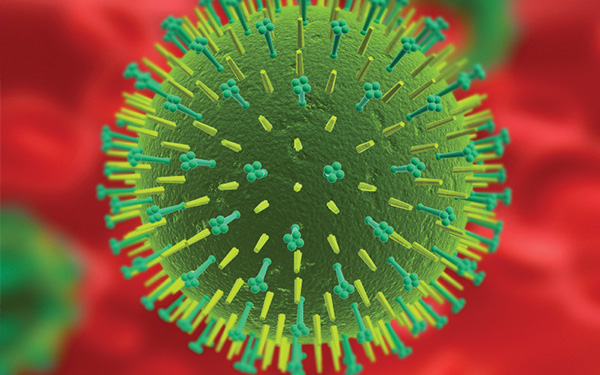
The influenza virus, or the flu, spreads rapidly among students—and so do myths and misunderstandings about what the flu means for them and how to avoid it. We asked two leading experts on vaccine safety to answer your questions about the flu and the flu vaccine. More than 800 students participated. The questions revealed many false beliefs about the safety and effectiveness of the flu vaccine, the science behind it, and its relevance to students.
Unreliable info
Many college and university students think they know more about the flu vaccine than is actually the case, according to a study published in Risk Analysis (2012). Students’ “knowledge” relies heavily on dubious sources, like social media and anecdotes.
Your risk
Everyone is at high risk of catching the flu because it is so contagious. Teens and young adults are disproportionately prone to serious flu complications.
Why are young adults at relatively high risk of serious flu complications?
The influenza virus can kill in three ways:
- Directly—it reproduces in the lungs, sometimes leading to pneumonia.
- Indirectly—it sets the scene for a bacterial superinfection, such as Staphylococcus aureus, on top of the pneumonia.
- The influenza virus can cause an overwhelming immune response that lowers blood pressure and leads to a condition similar to sepsis (a blood infection that can cause organ failure). This accounts for the relatively high death rate among otherwise healthy teens and young adults. Essentially, people “die at the hands of their own immune system,” says Dr. Offit. “You get some time to recover from the virus, but if it’s not looking good, you get culled from the herd. From a group perspective, this has benefits.”
Our experts Paul Offit, MD, professor of vaccinology and professor of pediatrics at the University of Pennsylvania School of Medicine
Joanne Langley, MD, MSc, Professor of Pediatrics and Community Health and Epidemiology at Dalhousie Medical School, CIHR-GSK Chair in Pediatric Vaccinology, Division of Infectious Diseases, IWK Health Centre in Halifax, Nova Scotia
#1. Does the flu shot work?
How effective has the flu vaccine proven to be through empirical research?
- The influenza vaccine as a shot, across all age groups, is 65 percent effective at preventing moderate to severe illness caused by influenza.
- For young, healthy people with stronger immune systems, its effectiveness is higher than 65 percent. For young children, the live attenuated nasal spray is 80—90 percent effective.
- It’s not a perfect vaccine, but if you don’t get it, your protection is 0 percent.
- The influenza virus changes every year, so immunization doesn’t protect you year after year.
- In the last two years we’ve seen the same predominant strains, so the vaccine functions like a booster and the effectiveness has been higher.
With the flu vaccine
At least 65 percent protection
Without the flu vaccine
0 percent protection
#2. Am I at risk?
If I never get the flu, why should I get the vaccine?
Reasons to get vaccinated:
- You might be the person who gets very sick from the flu Every year, between 10—20 percent of the Canadian population is infected with influenza and an estimated 20,000 are hospitalized. An influenza pandemic is most dangerous for the very young and very old. Teens and young adults are also at elevated risk of serious complications.
Natural infection (also called the wild type) is uncontrollable. The young adults who died in the 1918—19 flu pandemic were overwhelmed by their own vigorous immune response. The vaccine provides a controlled immune response.
- Your immunization protects people who can’t get vaccinated There are a number of people who can’t be vaccinated. That’s because they are undergoing chemotherapy or immunosuppressant therapy, or are less than six months old. They rely on herd immunity (the immunization of the population) for protection from disease. By protecting yourself, you are protecting the vulnerable.
- Everyone, regardless of health status, is susceptible to the influenza virus If I took your blood and separated the serum and sent it to a lab, the chance that you’re going to have antibodies directed against several influenza viruses is about 100 percent. No one gets to young adulthood without at least a mild influenza infection.
#3. Which flu strain?
Is it true that the flu vaccine is just a guess as to which strain will hit this year, and could be wrong?
- “It’s not a guess. The World Health Organization works with about 80 laboratories around the world that submit specimens from people who have influenza. They analyze those influenza viruses to see what ones are most common”—Dr. Langley.
- The influenza vaccine protects against the four influenza strains considered most likely to predominate in any given year.
- Each year we usually have four predominant circulating strains: one H1N1, one H3N2, and two B types. Scientists developing the vaccine take an educated guess based on the strains circulating in South America, since those strains usually sweep across North America.
- Last year all four of the predominant strains were in the vaccine.
#4. Can the flu shot backfire?
Why do some people get the flu after getting the flu vaccine? Can the vaccine cause the flu?
- The flu shot can’t possibly cause flu, because it’s not a live virus.
- The nasal spray is a live attenuated vaccine, weakened so that it can’t cause infection. Those viruses can’t reproduce at body temperature, survive in the lungs, or cause the flu.
Why some people might believe they’ve caught the flu from the vaccine:
- The vaccine is usually given at the start of the influenza season, when they might be exposed to the virus in any case—e.g., the student coughing next to them in class or at the health centre.
- The vaccine takes 7 to 10 days to become fully effective. During that period, they can continue to be exposed to the virus and/or develop symptoms.
- “People may become ill with another respiratory virus. The influenza vaccine protects against [strains] of the influenza virus, but there are a lot of other viruses that give us symptoms of a cold”—Dr. Langley.
#5. Are there side effects?
How often do adverse effects occur, and are they permanent?
- “The most common side effect is a sore arm from the injection” –Dr. Langley.
- The flu shot can cause pain and redness at the site and sometimes a low-grade fever.
- The nasal spray can sometimes cause mild upper respiratory symptoms, like sniffles.
- These days even people with severe egg allergies can get the flu vaccine. Vaccines are made in eggs, and in the past they could become contaminated. Now there is so little contamination, that risk has gone.
#6. Could I have natural immunity?
I like to think my body can take care of itself. Can it?
- There are two ways we can become immune to a specific organism:
- Natural infection
- Immunization
- You’re not going to have natural immunity before you’ve been exposed. The vaccine provides the same immunity that’s induced by natural infection without your having to pay the price of natural infection. “Natural” is not always good. Smallpox is natural.
#7. Do healthy habits help?
If I take care of myself by exercising, eating a healthy diet, and hand washing, am I protected against the flu?
- Healthy habits like exercise and good nutrition do not strengthen your immune system or protect you from infection.
- Frequent, thorough hand washing can reduce your exposure to infections that spread via contaminated surfaces. If you’re exposed, hand washing won’t protect you from developing symptoms. And remember, the influenza virus is airborne.
- Your natural immune system can only do so much. Franklin D. Roosevelt was a vigorous, active, healthy, wealthy man who exercised and ate the right food. At age 39 he came into contact with the polio virus and was paralyzed for the rest of his life.
- Caveat: Healthy behaviours could in theory provide a limited immune boost via the placebo effect. Feeling good about your healthy lifestyle might help protect you from stress. Stress can raise your blood pressure and affect your immune system.
#8. What about the long term?
I’m curious whether the more times you get the vaccine the less effective it is for preventing the flu. Also, does the flu vaccine allow the virus to mutate and become stronger?
- No. Getting the influenza vaccine every year does not reduce its effectiveness over time.
- You cannot “use up” your immune response. Every day we each make one billion new antibody-producing cells to add to the “memory cells” from past immunizations. That’s why we don’t die from the germs we’re exposed to routinely. This is also why we can safely handle vaccinations.
- Viruses don’t work like bacteria. The measles vaccine was introduced in 1963, mumps in 1967, rubella in 1969, and polio in 1955. Those viruses haven’t mutated away from the vaccine. To mutate away from the vaccine, the virus would probably have to undergo a series of changes that would be lethal to the virus itself.
- Influenza virus mutation is an ongoing process related to the way the virus replicates. It has nothing to do with the influenza vaccine.
#9. Do we have enough data?
I’ve heard the flu shot is still in the new stages of medicine and we can’t be sure of its safety—or that it’s a ploy to make money for pharmaceutical companies.
- How much more data do you want? We have a population of more than 35 million people. Each year, an estimated one-quarter to one-third of the population gets the flu vaccine. We have 60 years of evidence. Vaccines are the safest thing we put into our children.
- “Influenza vaccines are among the most studied. This is a well-studied vaccine and not a novel scientific innovation at this point” –Dr. Langley.
- The flu vaccine was introduced in 1947. Each year it targets a varying combination of influenza strains. It is manufactured in an identical process each year, and therefore its safety profile doesn’t change.
- Does the vaccine work? Yes. The conspiracy suggestion is a straw man issue. Yes, vaccines are made by a for-profit industry. But the issue is not “Are people making money from vaccines?” The issue is its effectiveness.
#10. What about the other ingredients?
Is it true that the flu shot contains mercury and other ingredients associated with health problems?
- The type of mercury used in vaccines is different from environmental mercury. It is eliminated from the body 10 times more quickly. The amount is trivial—less than you’re exposed to every day, assuming you drink anything made from water. Babies are exposed to more mercury every day in breast milk or formula than they’d ever get from a vaccine.
- Formaldehyde is used to make sure the virus can’t reproduce itself. Formaldehyde is a by-product of human metabolism, and circulates in your bloodstream at levels far greater than you would ever get from the vaccine.
Why students value the flu vaccine
Why are people so against getting the flu shot? It’s not like it’s hard or painful to get. It helps people who are at high risk from getting sick. I am in that category.
—Tanja R., second-year student at Confederation College in Thunder Bay, Ontario
I am a nursing instructor. There is A LOT of misinformation and ignorance about the flu shot. It’s a tool in our tool kit. It’s not 100 percent [effective] but at least it is something.
—Ryan W., University of Lethbridge in Alberta
There are countries with people who would kill to get a vaccine, and we turn our noses up at free [preventive] health care? I missed my 12-year booster shot by accident, and I wound up getting whooping cough at the age of 18. If there were any way I could have prevented that, I would take it.
—Rachel I., third-year student at Humber College in Toronto, Ontario
I find it ridiculous that so many people don’t believe that vaccines work or that they are harmful. Vaccines have been around a long time and have significantly reduced child mortality. In addition, people who do not get flu vaccines and believe they are safe are simply protected by those who did.
—Quade D., second-year student at Lakehead University in Thunder Bay, Ontario

