


Firsthand stories of first-gen students
 |

Attending university or college can be a transformational experience. It does, however, bring a series of challenges. For first-generation students, whose parents did not have the same opportunities, there may be additional financial, academic, social, and family issues.
The key is intergrating socially and academically into college or university life. “When you’re the first in your family to [forge] the trail into post-secondary education, everything can seem new. Knowing there are services and supports on campus and where to access them is a very important step in becoming comfortable with the process,” says Melissa Ouimette, First-Generation Coordinator at Algoma University in Ontario.
studentvoice

Here, first-generation students and faculty researchers and advisors reflect on the challenges and offer advice on how to succeed.
How to integrate academically and socially
“Once you start getting involved, whether you’re a first-generation student or not, you get more confidence to speak up, join groups, speak to your professors, look for employment opportunities, and use other resources. Your advisors can tell you what options are available and how to take advantage of them,” says Racine Senining, First Year Transition Programs Facilitator at Humber College, Ontario.
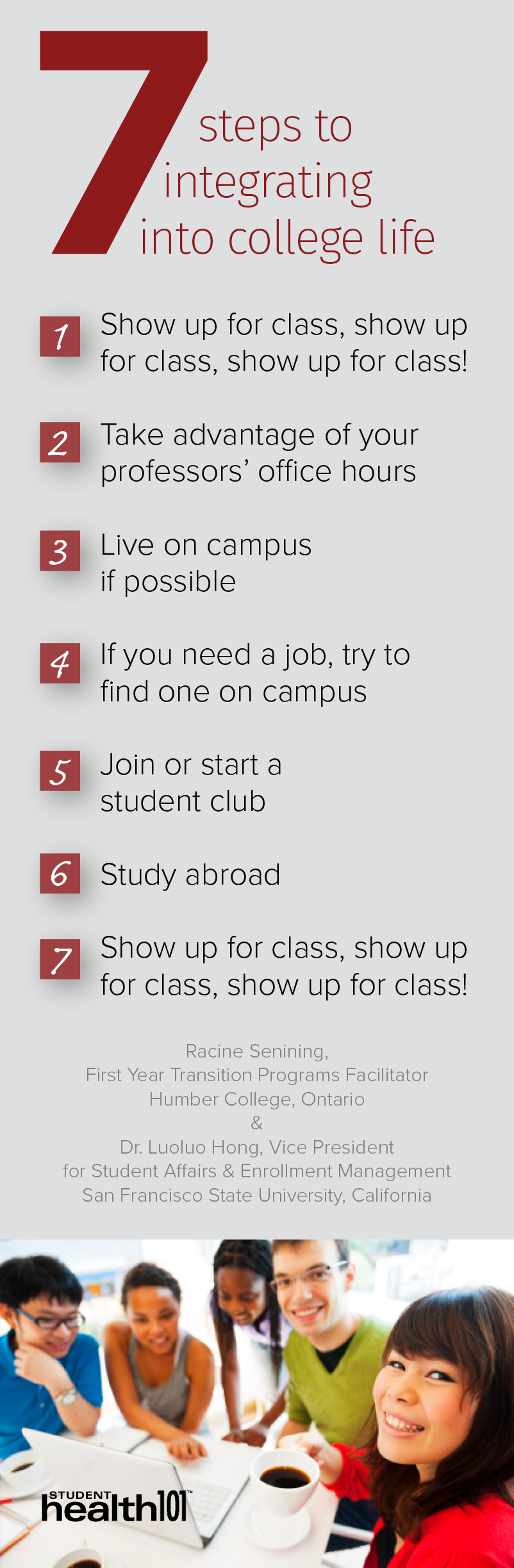
Her suggestions for how to get integrated on campus:
- Go to new student or transfer student orientation
- Show up for class, show up for class, show up for class!
- Take advantage of your professors’ office hours to discuss questions or ideas; get to know your faculty
- Live on campus if you can; you’ll be better connected to the community and more likely to get involved
- If you have to work, get a job on campus rather than off campus
- Study abroad
- Join a student club or start one
- Use the services available to you on campus, from the registrar’s office to peer tutoring
- Ask lots of questions
Being involved in campus activities was linked to higher GPAs for first-generation and non-first-gen students, according to a study by York University researcher J. Paul Grayson (Research in Higher Education, 1997).


|
Colin KlippensteinRecent graduate | Education |
What was your motivation for going to university?
I have a passion for learning, so I wanted to further my education. My parents encouraged me to do whatever I wanted, and what I wanted throughout [secondary] school was to go to university. University life was also an easier transition for me than going straight to work.
What were some things you wish you’d known before starting university?
My main concerns at the time were about where I would live and how I would be able to support my education. I also didn’t know how difficult university would be. For example, first-year Math was hard for me. I got through it by rewatching lectures, doing 4+ hours of homework per night, and going to tutorials. Nothing prepared me for that much coursework.
How did you pay for school?
I worked all through high school. I also worked three campus jobs in addition to [attending] class. I still had to finance my schooling through student loans. My mom would visit and take me out for lunch and buy me groceries. This was a small but huge gesture of kindness that we both enjoyed.
How to approach the financial challenge
Forty-one percent of first-generation students have parents who saved for their education, compared with 52 percent of non-first-generation students, according to a 2010 study by Measuring the Effectiveness of Student Aid Project (MESA), a collaboration of the Educational Policy Institute and the School of Public Policy at Queen’s University.
What happens when your parents aren’t able to cover your college costs? “It often means holding down jobs during the term or working in the summer. It means having to divide your time between making money, studying, and having a social life on campus,” says Dr. Wolfgang Lehmann, Associate Professor at Western University in Ontario, who conducted annual interviews with 37 first-generation students during their time at university.
Hidden resources
“A lot of students are unaware of financial aid or how to apply for financial aid. They think they’re just paying out of their own pocket,” says Melissa Ouimette, First Generation Coordinator at Algoma University in Ontario.
Bursaries and scholarships specifically for first-generation students can alleviate some of this burden. Many schools offer them—just check in with the financial aid office on your campus.
There are also provincial and federal resources available. The options include:
- The Ontario First Generation Bursary awards between $1,000 and $3,500 to successful applicants. This annual bursary is open to undergraduate students in all programs.
- Federal grants are available for students from low-income families and for full-time students with dependents.
+ For more information on federal and provincial financial assistance, check out CanLearn.
How did working through school affect your social life?
My social life suffered because of my attitude toward working and financial responsibility, which was instilled by my parents. I did not have as many opportunities to go out to the bars or clubs. And even when I went out, I had to look at how much I could spend, which limited the amount of fun that I could have.
What were some benefits of being a first-generation student?
Being first-generation made the transition to adulthood easier; I had to pay my own way and find balance between work and life. It also made my parents more proud of me, and I was proud of them for the support they could give. Even if they did not fully understand what I was going through, they could empathize and offer advice about friendships, relationships, etc. They had trust in my ability to succeed.
The first-gen advantage
Becoming self-sufficient
Students who participated in Dr. Lehmann’s research highlighted several benefits to being first generation: “They said, ‘In hindsight, that was an advantage. Not having anyone to talk to meant I had to become much more independent and resourceful, and even though that might have been scary, I’m glad I had to do it.’” —WL
Learning from family
Many students learned to work hard from their families, and being first in the family made them “uniquely motivated to do well.” —WL
Greater chance of success
A greater percentage of first-generation college and university students stayed in school past their first or second years in comparison with their non-first-gen peers, according to a 2010 study by the Measuring the Effectiveness of Student Aid Project (MESA), a collaboration of the Educational Policy Institute and the School of Public Policy at Queen’s University.


|
Shelby BlackleyFourth-year undergraduate | Sociology and English |
Why did you go to university?
While I was growing up, my parents emphasized it. ‘We didn’t get the opportunity. It’s important, especially with the changing job market,’ they said. They really pushed me to go to post-secondary school.
Family feats and frustrations
Trying to relate
“[First-gen students] found it difficult to talk to their parents about life at university because their parents didn’t know what they were studying and also didn’t know what it meant to be at university, to live at university,” says Dr. Wolfgang Lehmann, Associate Professor at Western University in Ontario, who conducted annual interviews with 37 first-generation students during their time at university.
Pressure to be a role model
Students can also face pressure from their families to succeed in areas where their parents did not. Middle-class and ethnic minority students often face elevated pressures from their families to excel in post-secondary, according to Dr. Lehmann’s research.
Feelings of inferiority
“Some students’ close relatives assume that first-gen students think they’re better than everyone else because they’ve gone to university,” says Melissa Ouimette, First Generation Coordinator at Algoma University, Ontario.
Here’s what helps:
- “Keep your parents involved and ‘in the know.’” —MO
- Talk to them about classes and assignments
- Keep your family up-to-date on when your exams are
- Let them know how you’re getting involved at school
- Invite them to on-campus events directed toward families or see if your school provides a newsletter for parents (e.g., Student Health 101’s Student Advocate).
How did their expectations affect your transition?
It was tough. I’ve always been a really driven person, but I had to worry about getting good grades and being able to pay for it. My parents have decent jobs, but they don’t make enough to pay for our schooling. Not having the background of what university was like, and having to make enough money to put myself through it, was a big transition for me.
Were there things you wished your parents could have prepared you for?
I didn’t know what to expect—what clothes would be appropriate or how much money I would need for extra expenses. They didn’t know how expensive or exhausting it would be to get through school.
How has your relationship with your parents changed?
We got stronger as a family because I grew up a lot and got to experience something they didn’t really know. I was able to tell them about what I was learning, what I was doing, my social experiences, my friends, etc. My parents and I are extremely close.
How did working through school affect your ACADEMIC life?
I worked two jobs every summer and a part-time job in my fourth year. My grades suffered. I was a good student, but I could have done better if I wasn’t worrying about making money, being involved in extracurriculars so I could apply for bursaries, etc. I’m always thinking about how I’m going to do this on my own.
What advice would you give to other first-generation students?
Don’t be afraid to ask [other people the] questions that your parents might not be able to answer. I was stubborn in my first few years, and I didn’t want to ask anyone. I thought I could do it all on my own.
How to get help when you need it
Use your resources
“On many campuses, there is extra support available for first-generation students. There is someone to answer questions about how to fill out bursaries, what events are happening on campus, where to access supports and services, and where to get academic advising and career advice. The first-gen contact person at the university can lead you in the right direction, and our doors are always open,” says Melissa Ouimette, First Generation Coordinator at Algoma University, Ontario.
Your school’s first-generation coordinator, advisor, or office can help you:
- Register for classes
- Fill out student aid forms
- Learn about services on campus
- Connect with peer mentors
- Find student success workshops
- Prepare for your future after university or college
- Find out about on-campus events
If your school doesn’t have first-generation support, reach out to other resources on campus.
studentvoice

