


Personal mixology
Your body, your life, your limits
 |

Not all of us can handle the same amount of alcohol. Different body types, genes, minds, and experiences affect our tolerance. Here, five students talk about their relationship with alcohol in the context of their own risk factors: A family history of alcoholism; fatigue and stress; small body size; medication interaction; and diabetes. Two experts suggest customized strategies for managing their alcohol consumption.
Experts
- Dr. Abby Goldstein is a Certified Psychologist and Assistant Professor of Psychology at the University of Toronto, Ontario. She is the Chair of the Addiction Psychology Section with the Canadian Psychological Association. (AG)
- Dr. Scott Lukas directs the Behavioral Psychopharmacology Research Laboratory at McLean Hospital in Belmont, Massachusetts, and the McLean Imaging Center. He is Professor of Psychiatry at Harvard Medical School. (SL)
- Dr. Nathilee Caldeira is a Licensed Clinical Psychologist at the Student Mental Health Center at Columbia University Medical Center, New York, and the founder of Let’s Talk Psychological Wellness PC. (NC)
* All students’ names have been changed for privacy. All students featured are age 19+.
Drinking while small-bodied
Carly’s story:
“I’m 152 cm (5’0”) and I weigh 48 kg (105 pounds). Alcohol affects me a lot faster than other people. Whenever I go out with my friends, I feel like I’m trying to keep up with them, whether that be the amount of alcohol I consume or how fast I drink it.”
Why is being small-bodied a risk factor when drinking?
Carly* is a female fourth-year student at Humber College in Toronto, Ontario
- People with lower body weight have a slightly higher Blood Alcohol Content [BAC] after drinking the same amount as heavier people.
- Most women have a lower ratio of muscle to fat than most men, meaning they have less blood and water to dilute the alcohol.
- Women typically have less alcohol dehydrogenase (an enzyme that breaks down alcohol).
- The sex hormones interact with alcohol: Alcohol is often more intoxicating just before menstruation.
How Carly handles it
“After every alcoholic beverage, I drink a glass of water, and beforehand, I make sure I eat a good, hearty meal. A lot of water before bed makes the mornings bearable.
“My real friends know that I need to slow down on my drinking, so I don’t feel pressured to drink more. They encourage me to have just a couple and take it seriously. They have seen firsthand how alcohol affects me.
“All of my friends are a lot taller or bigger than I am. I don’t try to keep up with bigger drinkers; it doesn’t turn out well.”
Expert view
“A good strategy to prevent overdrinking, or minimize some of the harm of drinking, is to alternate between drinking something that has alcohol in it and something that doesn’t. This way, you’re not only drinking alcoholic beverages, and you have rest periods between drinks.” —AG
Red flags for small-bodied drinkers
- Hanging out with people you don’t know very well, who may not understand why you are choosing to drink less
- Hanging out with anyone who drinks excessively
Strategies that work
- “Being firm and sticking to a plan is the best strategy.” —SL
- “Having a buddy system in place is a way that friends can keep an eye out for each other. This should be discussed ahead of time. Talk about how you’ll help each other out, so that the expectations are clear before the night begins.” —AG
- Drink more slowly: Use a larger glass with added seltzer or soda.
- Choose lower-alcohol drinks, e.g., light beer, mixed drinks with only 1 shot of 80-proof liquor, or regular wine.
- Alternate with non-alcoholic drinks: “A pina colada or daiquiri made without alcohol often looks exactly like the mixed drink, which may take some of the pressure off.” —SL
Drinking while medicated
Julian’s story:
“I took Cipralex for depression and anxiety for about a year. I was told that I could drink in moderation, but whenever I drank too much, it made the medication less effective. I would revert back to how I felt before using it.”
Julian*, male, fourth-year student at Carleton University in Ottawa, Ontario
- Interactions between alcohol and medication are common. Alcohol can amplify or reduce the effects of medication, and worsen your driving.
- “Alcohol does not mix well with any medication that is used to treat a psychiatric condition. The interactions are not always predictable, and they can change over time in the same person.” —SL
- Talk with your prescribing doctor or pharmacist about interactions between alcohol and medications, whether they are prescribed, over-the-counter, or herbal.
- Check for drug and alcohol interactions.
How Julian handles it socially
“I don’t usually drink by myself. I may drink a few beers when I’m watching sports with friends, playing games, or hanging out with my roommates. On the weekends, when I go out with friends, I drink more—but never to the point where I become belligerent. When I noticed that alcohol affected my medication, I drank less.”
Expert views
“Julian needs to set limits before he goes out with friends. Drinking at a bar is still risky unless he has a non-drinking buddy to watch over him. The effects can creep up quickly.” —SL
Knowing how his medication works will help Julian.
“It’s good for everybody to be aware of risk factors that might make it more likely for their drinking to become a problem. Awareness of risk factors is important for making informed choices about drinking.” —AG
Red flags for drinking while medicated
- Deciding to drink more than usual without close friends nearby
- Drinking unfamiliar alcoholic beverages, which may interact with your medication in unexpected ways
- A depressive phase, which raises the risk of self-medicating with alcohol
Strategies that work
- Brief counselling sessions can help you decrease the frequency and amount of alcohol use, and help you strategize around the conflict between good health and risky habits. —NC
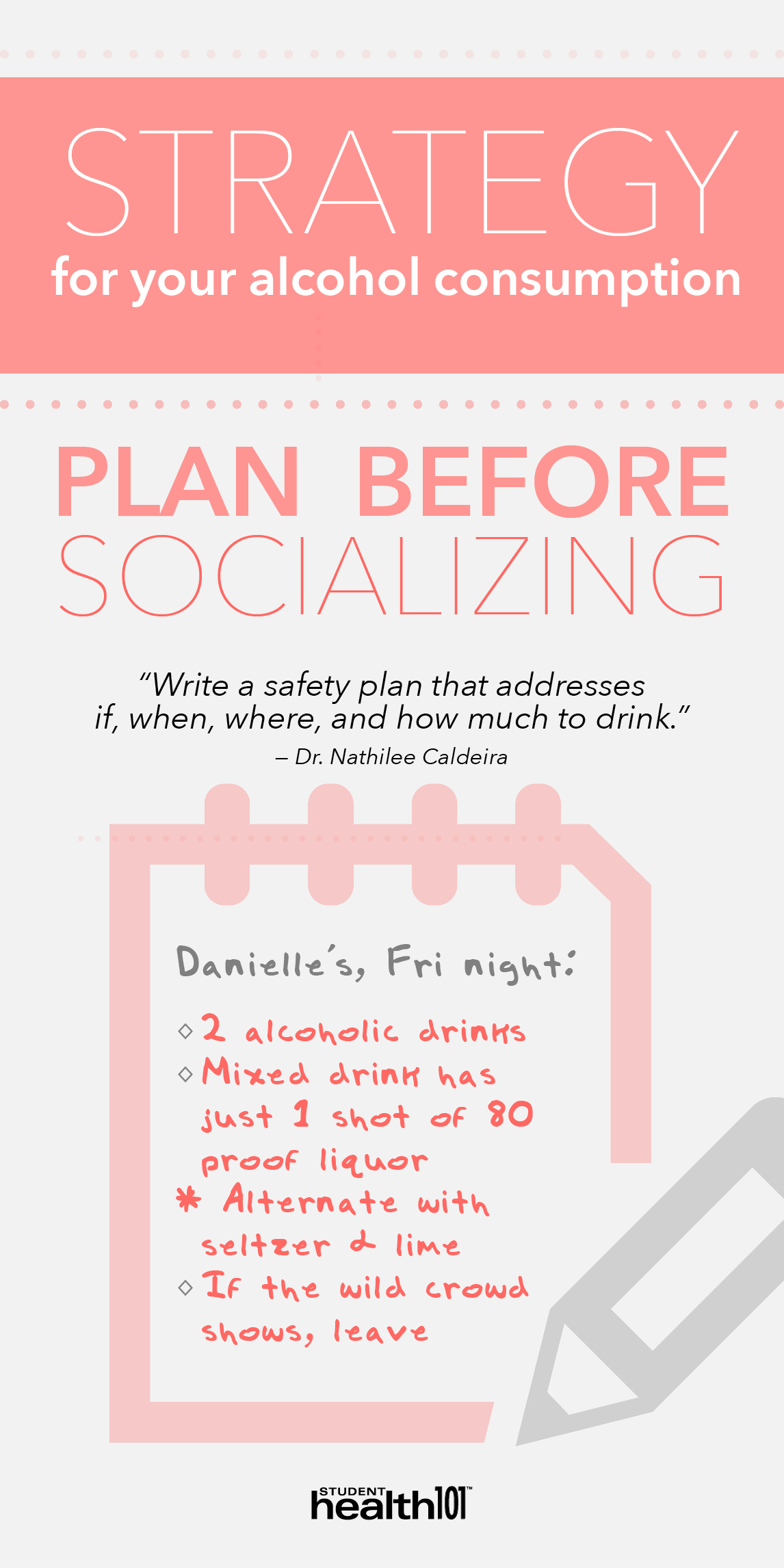
- Instead of relying on your instincts about what’s a safe environment, come up with a written safety plan that addresses if, when, where, and how much to drink; e.g., “Two alcoholic drinks diluted with extra seltzer, drinking only if the environment seems safe, and leave by 12:30 a.m.” —NC
Family history of alcoholism
Steve’s story:
“My mother’s older brother has a long history of alcoholism, beginning when he was just a teenager. My uncle has shaped my alcohol habits—I remember hearing stories of him being drunk all day, even at work. On any given week, I am not likely to drink. For me, it’s a once-in-a-while thing to enjoy with friends, usually for some sort of occasion.”
Why is family alcoholism a risk factor when drinking?
Steve* is male first-year graduate student at the University of Windsor in Ontario
- Alcoholism can run in families, according to an extensive body of research.
- “If people in your family struggle with alcohol abuse, you’re not doomed. Up to 30 percent of an individual’s risk of alcoholism is genetic. The environment and your own experiences contribute 70+ percent.” —SL
- Researchers’ estimates of the genetic influence on alcohol use disorders is somewhat mixed. The National Institute of Alcohol Abuse and Alcoholism in the US says genes are responsible for about 50 percent of the risk for alcoholism. The quality of parenting, which can be impaired by alcohol abuse, also affects children’s risk of developing an alcohol use disorder later.
How Steve handles it
“Because I know I have classic ‘risk factors,’ I have kept alcohol to an evening activity with friends only. I refuse to drink alone, and I plan ahead. I never go somewhere to drink without knowing exactly how I’m getting home.”
Expert views
“Students who have a family history of alcohol problems are more likely to develop alcohol problems themselves. If you have risk factors for the development of drinking problems, consider being more careful about your drinking or choose not to drink at all.” —AG
“We often see the family members of individuals with an alcoholic-use disorder go to the extreme and never touch any alcohol, because they’ve lived through the devastation that excessive alcohol causes.” —SL
Red flags for people with a genetic susceptibility
- You may be especially sensitive to environmental triggers. “The smells of preferred alcoholic beverages are the primary cues. People, places, and even events are secondary cues. Seeing a drinking buddy unexpectedly can trigger the craving for alcohol.” —SL
- “Other risk factors for potentially developing alcohol problems include personality traits such as impulsivity or sensation seeking. These risk factors aren’t exclusive to those with a family history of alcohol problems.” —AG
Strategies that work
- “Knowing that you have a family history of alcoholism is key. And know your cues, which are specific to individuals: One person may crave beer and have no reaction to whiskey or vodka. If you used to go to a specific bar to drink, then go to a different establishment for dinner.” —SL
- “If you can’t easily cut down, switch to a different beverage; perhaps pick one that is not so [appetizing]. This strategy will help reduce the number of drinks per night.” —SL
- Put a limit on your drinking: Figure out your limit.
- Drink slower: “‘SavoUring’ the drink spreads out the absorption over a longer period so that blood alcohol levels do not get dangerously high. Avoid ‘chugging’ or any drinking games. Drinking games are designed to have you fail, and they promote more drinking.” —SL
- Seek support from an individual therapist or a support group such as Adult Children of Alcoholics, Al-Anon, or Alateen.
Fatigue + stress + alcohol
Bianca’s story:
“I often drink to ‘ease the stress,’ make myself feel better after a bad day, or to celebrate things, such as getting through midterms or doing a good job on a test. Stress is a definite factor in my drinking. The more stress I am under, the more often I feel the need to drink to deal with it.”
Bianca* is a female, third-year student at the University of Victoria in British Columbia
- Alcohol is a depressant. Its effects can be exaggerated when you’re fatigued, depressed, anxious, or stressed.
- “Alcohol can reduce the ‘perception’ of stress. But with increased use, continued drinking actually dampens your stress response mechanisms, and it becomes a cycle of dependency because heavy alcohol use causes a good deal of stress (worrying about withdrawal signs, getting sick, having an accident, etc.).” —SL
How Bianca handles it
“Alcohol does help me relax, as long as I can manage to keep it under control and not abuse it. But I’m really bad at stopping once I have started, and I usually don’t do so until I run out. It is not a good solution to stress and fatigue. It’s circular: The more you drink for stress and fatigue, the more stress and fatigue you will have.”
Expert view
“Alcohol’s ability to keep you calm and relaxed are short-lived. In fact, the after-effects of drinking often mimic the effects of anxiety. In addition, the use of alcohol to cope with stress or negative emotions provides fewer opportunities to learn other, more adaptive, problem-solving, or stress-reduction strategies.” —AG
Red flags for drinking while stressed or fatigued
- Periods of intense academic pressure, such as before or after exams
- “Frequent heavy drinking is often linked to academic problems, such as missing classes because of drinking the night before, falling behind, or doing poorly on exams. Even infrequent heavy drinking can lead to problems, depending on the person and the situation.” —AG
- “Thoughts like ‘Having a few drinks makes my troubles go away’ predict future alcohol dependency problems.” —SL
- Anxiety: “If you have an anxiety disorder, you are more than twice as likely as someone without an anxiety disorder to develop an alcohol dependency.” —SL
Strategies that work
- “If you have any concerns about your drinking, it’s a good idea to talk to someone about it. You can go to the counselling centre at your university or get in contact with a mental health professional who can give you more information about your drinking, and if you’re interested, help you come up with ways to reduce it.” —AG
- “I know this sounds corny, but get plenty of sleep! The cycle of being tired all the time will increase stress, blood pressure, diabetes risk, depression, and a whole host of other problems that an individual might try to self-medicate with alcohol.” —SL
- Guide to managing your stress
Drinking while diabetic
Christophe's story:
“I use insulin and check my blood sugars three or four times a day. My friends know I’m diabetic, so they always watch out for me. I drink anything, really, but I try to drink low-carb beer and mixed drinks with diet pop.”
Christophe,* male, fourth-year student at Mount Allison University in New Brunswick, Canada
- Most people with diabetes can safely consume alcohol in moderate amounts, according to the Canadian Diabetes Association (CDA).
- It is very important to monitor your blood sugar and be alert for symptoms of hypoglycemia, which can be similar to those of intoxication.
- The CDA recommends a limit of two drinks a day for women, three for men.
- “Alcohol increases triglyceride levels [a risk factor for diabetes and complications of diabetes] and can interfere with the positive effects of oral insulin products.” —SL
- Consult a doctor about managing your own situation.
How Christophe handles it
“I usually drink twice a week. Since alcohol brings down blood sugars, I will occasionally have a drink made with real sugar. I always carry sugar pills. My friends can tell if I look shaky and sweaty, and they come and ask if I’m OK.”
Expert view
“Christophe is aware of his health condition: He monitors it regularly, and he’s willing to adjust his behaviour, but he is not managing the risk factor very effectively. Alcohol lowers blood sugars, but it’s more complicated than that. Over time, alcohol can reduce the effectiveness of insulin and raise glucose levels. He should consult his own health care providers about his. Christophe seems to act on good information when he has access to it.” —NC
Red flags for people with diabetes
- Socializing with people who may not know about your health condition and signs and symptoms of changes in blood sugar.
- Deciding to drink more frequently and consuming increased amounts of alcohol.
- “Signs of hypoglycemia include: blurred vision, rapid heartbeat, pale skin colour, sweating, shaking, and skin tingling. Other signs that will be apparent include: sudden mood changes, nervousness, fatigue, extreme hunger, and eventually a quick loss of consciousness.” —SL
- Drinks may have more hidden calories
than Christophe realizes, and then he could be thrown into a dietary imbalance, increasing the risk of complications.”—SL
Strategies that work
- Talk to your doctor about safer alcohol use while managing diabetes.
- “Adhere to a rule about what types of drinks can be consumed safely, and then follow a strict limit.” —SL
- “Only individuals who have their diabetes and blood sugar well under control should consider social drinking. The calories provided by a single drink should be counted as two fat exchanges. Alcohol also stimulates appetite in many people; that can cause overeating and is a problem for people with diabetes.” —SL
Strategies for managing your alcohol consumption
Practice saying “no” to a drink
- Role-play with a friend or counsellor.
- Ask and remind friends to support
your decisions about drinking limits.
Alternate and/or dilute your drinks
- Ask for “lighter” alcoholic drinks with less alcohol, or in a larger glass with added seltzer or soda.
- “Ask for a piba colada or daiquiri made without alcohol. These drinks look exactly alike, which may take some of the pressure off.” —SL
- Alternate alcoholic drinks with water, seltzer, or soda.
Shake up your habits
- Switch to a different beverage—one that isn’t your favourite.
- “Avoid ‘chugging’ or drinking games. Drinking games are designed to have you fail, and they promote more drinking.” —SL
Know your cues
- Cues or triggers are specific to individuals. Know what yours are. One person might crave beer and have no reaction to whiskey or vodka.
- “If you used to go to a specific bar to drink, then go to a different establishment for dinner.” —SL
Drink slower
- “Increasing the duration that it takes to finish a drink—‘savouring’ the drink— spreads out the absorption over a longer period so that blood alcohol levels do not get dangerously high.” —SL
- Impose limits, e.g., “I know I can handle one drink an hour after food, and I max out at two drinks a night.”
Try strategic counselling
- Brief counselling sessions can help you decrease the frequency and amount of your alcohol use, and address specific risk factors.
- Consider a support group, such as Adult Children of Alcoholics, Al-Anon, or Alateen.

